Warehouse floors
Troweled and broadcast builds thick enough for hard wheels and pallet jacks. Joints armored so the edges stop breaking down.
A shutdown costs more than the floor ever will. So we phase it. Half the floor stays live while the other half cures.
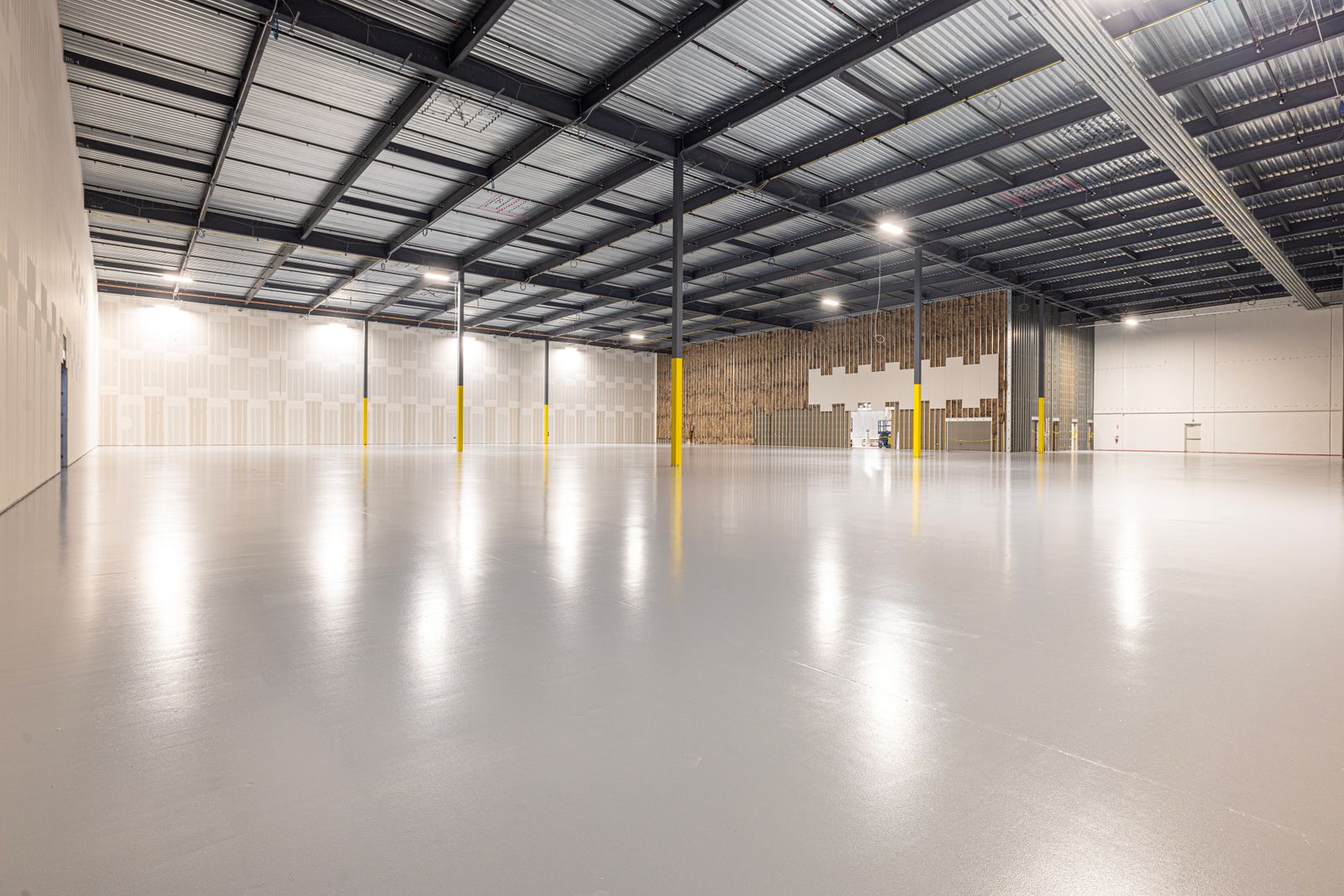
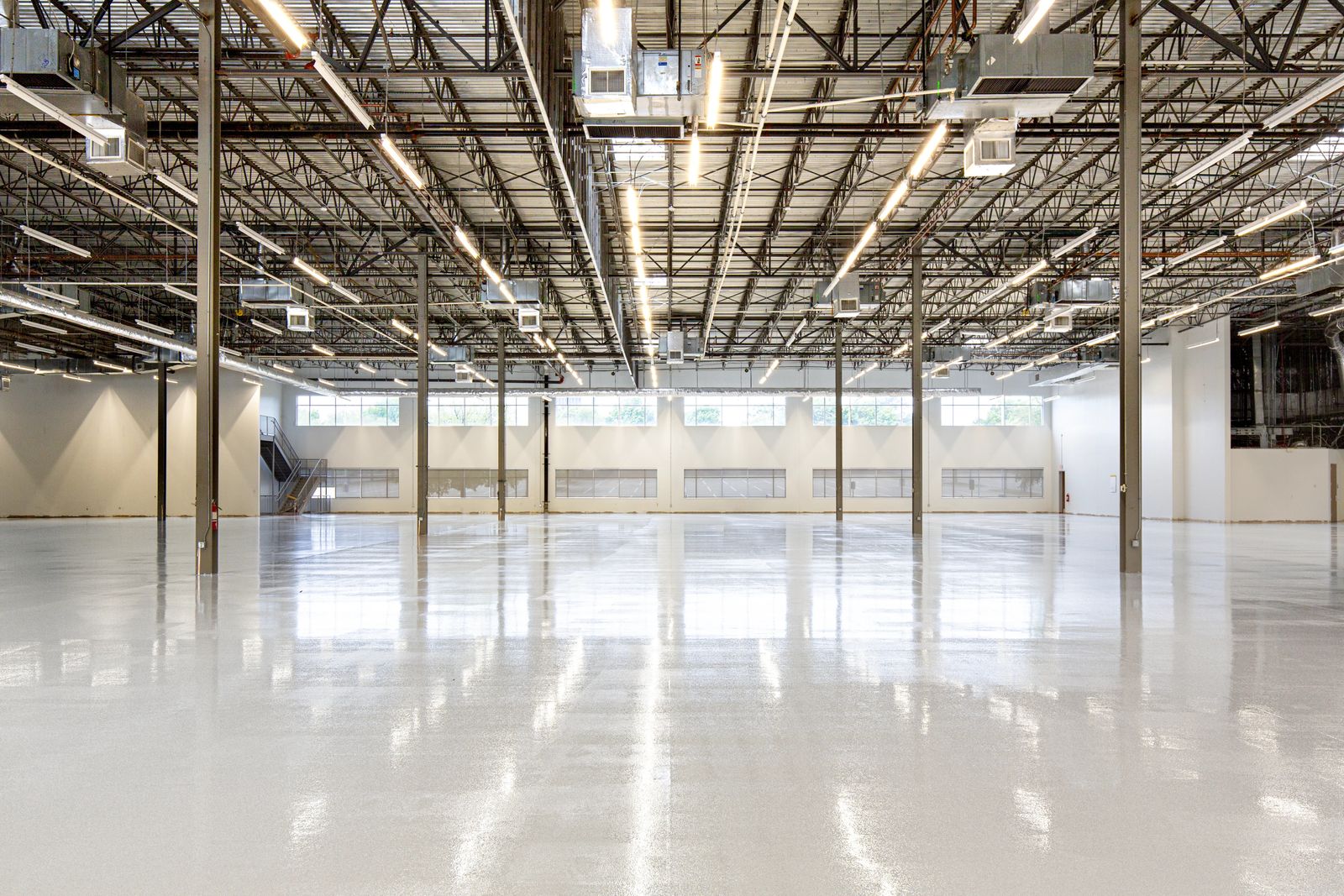
Square footage, traffic and what the slab takes every day. We walk it, test it and come back with a spec, a schedule and a number.
Spec, schedule and number in writing
Nights and weekends so you keep running
Warehouse, kitchen, shop, showroom and garage
Nobody closes a distribution center for four days so a slab can cure.
So the floor gets patched instead. Tape down some aisle markings, throw a thin roll-on over the worst of it, keep moving. Six months later the forklift wheels have chewed the coating back off and the joints are spalling wider than they started.
The other half of it is the spec. A thin-mill epoxy is a fine floor in a showroom and completely wrong at a wash-down dock, where thermal shock will pop it off in sheets no matter how well it was installed.
We phase the work around your hours and spec to the traffic, not to the invoice.
Troweled and broadcast builds thick enough for hard wheels and pallet jacks. Joints armored so the edges stop breaking down.
Urethane cement or novolac with integral cove base, so there is no seam for grease and water to creep under. Takes hot wash-down daily.
Chemical-resistant builds under lifts and presses. Hydraulic fluid, coolant and brake cleaner wipe up instead of etching in.
High-gloss finishes that hold up to cart and foot traffic all day and still photograph clean for the website.
Line striping, OSHA-style safety markings and residential garages handled the same way.
Sectioned so production keeps running. You get the schedule in writing before anything gets moved.
Shot blast or diamond grind depending on the build. Old failing coatings come off entirely. Dust collection runs on everything so the rest of the building keeps working.
Control joints cut clean and filled, spalled edges rebuilt, low spots leveled. Moisture tested first, because a slab-on-grade with no vapor barrier will lift anything you put on it.
The system goes down to the spec'd thickness, troweled or broadcast. Cove base formed where it is called for. Aisle and safety markings laid into the floor, not taped on top.
Topcoat matched to the traffic, with the slip rating the space actually needs. Fast-cure systems hand the section back in hours, not days.
Tap any floor to open it full size
Fast-cure back to service
Scheduling, nights included
Lifespan when spec'd right
Across Tampa Bay
You get the system spec, the phasing plan and the number on paper before we mobilize. Facilities managers do not need surprises, they need a schedule that holds.
Book the site walkTraffic type, wash-down, thermal load and moisture reading decide the system. Quoting that off a square footage number is guesswork.
Which section, which night, when you get it back. You can plan your operation around it before you sign anything.
You can hold the spec sheet against the floor that went down. Nothing gets substituted quietly.
The people who walked your floor are the people on site at 2am. Nothing gets handed to a subcontractor.
Usually not for long. We section the work so half the floor stays live while the other cures, and we run nights and weekends when that is the only way to keep you open. Fast-cure systems return to service in hours.
Hard wheel and forklift traffic needs a thicker troweled or broadcast build, not a thin roll-on. Urethane cement is the workhorse where there is thermal shock or heavy impact, like docks and wash-down areas.
Yes. Kitchens get urethane cement or novolac with integral cove base so there is no seam for water and grease to get under. It takes hot wash-down, acids and food oils, with a textured slip-resistant finish.
Cost is driven by square footage, system spec and prep. A thin-mill coating over sound concrete is far cheaper per square foot than a troweled urethane build over a slab needing patching and joint work.
Yes. Aisles, walkways, equipment footprints and OSHA-style markings get laid into the system so they are part of the floor rather than tape that peels up.
We moisture test before specifying. Slab-on-grade with no vapor barrier can push enough vapor to lift a coating off. Where readings are high we use a mitigating primer or a vapor-tolerant system.
Tell us the space, the traffic and roughly the square footage. We walk it, test the slab and come back with a spec, a schedule and a number.
Serving Tampa, Hillsborough and Pinellas
Site walks Mon to Sat, install nights and weekends
Site walks are free with no obligation